
Don Tison
Don Tison
Orchestral
Principal Trumpet Player

Donald Rex Tison began his distinguised career as solo trumpet with the Naval Academy Band and then earned both undergraduate Bachelor’s and graduate, Masters degrees in Trumpet Performance from the University of Michigan under the GI Bill. His substantial experiences include recordings of the most prominent orchestral repertoire, a premiere of Donald Erb’s Concerto for Trumpet and Orchestra, and numerous solo appearances in America and abroad. Don Tison’s teachers include Donald Polosky, Paul Wilwerth, Lloyd Geisler, Clifford Lillya, and Vincent Cichowicz.
Don Tison is a brilliant, classical trumpet player that played principal trumpet from 1962-1967 with the New Orleans Symphony. (Don’s wife is a native New Orleanian.) Don Tison also played principal trumpet from 1968-2000 when he retired with the Baltimore Symphony Orchestra.
Don Tison’s professional orchestral career performing in the capacity as principal trumpet spanned a period of almost 40 years.
Don Tison was also on the faculty of Peabody Institute music conservatory for many decades.
Don Tison earned both a Bachelors and Masters Degree in Trumpet Performance from the University of Michigan. His trumpet teacher at the University of Michigan was Clifford Lillya.
Don’s roommate at the University of Michigan was my own trumpet teacher from 1967-1972, Walter Chesnut at the University of Massachusetts in Amherst.
In 1973, I was performing with the Cyprus National Chamber Orchestra in Nicosia, Cyprus. At the beginning of August of 1973, civil war broke out between the native Cypriot Turks and Greeks. The orchestra immediately disbanded, and all foreign nationals were transported to the Cyprus airport to return to their native countries.
When I returned to the United States in Mid-August of 1973, I contacted trombonist, Tim Beck who at that time was a senior at the Peabody Institute in Baltimore, Maryland. Tim was also performing with the Annapolis, Maryland Symphony under the Direction of Leon Fleisher.
I also contacted my former UMASS/Amherst trumpet instructor, Walter Chestnut. Walter Chesnut referred me to Don Tison for private lessons.
At the end of August of 1973, I relocated to Baltimore, Maryland via my soulful 1953 Chevrolet and my wonderful, loyal dog, King. I was appointed principal trumpet with the Annapolis, Maryland Symphony.
For the next nine months until the end of May of 1974, I began taking weekly trumpet lessons with Don Tison at Don’s home located in a suburb of Baltimore.
I told Don that I would like to get a gig performing with a major symphony orchestra.
I had acquired all of the many, over 20 volumes of ‘Orchestral Excerpts from the Symphonic Repertoire FOR TRUMPET published by the ‘International Music Company’ in New York. I had also acquired other volumes of Orchestral Excerpts for trumpet from other sources and publishers as well.
Don told me that as far as auditions are concerned, I should memorize and be able to flawlessly perform the 1st trumpet parts…the featured solo excerpts from the entire most performed classical symphonic and chamber music compositions.
For the next nine months, each week, I memorized 5-7 of the 1st trumpet featured excerpts. At each lesson where next week’s orchestral trumpet excerpts were
assigned for memorization, Don would have me play each of the assigned excerpts from an excerpt book during the course of the lesson. Don, would then demonstrate proper interpretation of the excerpt as needed. And, at each lesson, I would perform these excerpts from memory assigned to me the previous week at each of my weekly lessons. And, again, Don would pick up his own trumpet and provide me with a demonstration of ‘how an excerpt’ should be performed if corrections in my own interpretation were needed.
Don had a magnificent sound on trumpet, coupled with flawless technique, articulation, and musicality. Needless to say, my ‘symphony chops’, really began to mature.
Over a nine month period of taking weekly private lessons with Don Tison, I had memorized the featured trumpet excerpts for over 150 of the most popular classical symphonic and chamber music compositions. I would practice a minimum of four hours a day seven days a week. Much of this practice was playing from memory over and over again each of orchestral trumpet excerpts I had already committed to memory. At this time, virtually all of my practice revolved around the C, D/Eb, and piccolo trumpets.
On a daily basis, on Bb trumpet I also played my long time ‘Carmine Caruso’ warmup exercises as well as a random selection of etudes and technical studies that were introduced to me during my years at UMASS/Amherst.
While studying with Don Tison, and rehearsing a couple of nights a week with the Annapolis Symphony, I had a few opportunities to perform as an ‘extra’ with some Peabody Faculty Brass ensembles. Peabody faculty brass ensembles were made up members of the brass section of the fine, Baltimore Symphony. These ensembles performed and rehearsed at a recital hall in Peabody Music Conservatory. I remember rehearsing and performing as an extra trumpet player ‘guest’ on either a brass septet or brass nonet composition. I also rehearsed and performed as a second trumpet player substitute with the Peabody Faculty Brass Quintet. I substituted for rehearsals as well as a performance for the second trumpet player Rob Roy McGregor, who was out due to illness. Rob Roy McGregor studied under Clifford Lillya at the University of Michigan Music Department in Ann Arbor from 1961-1967. Rob Roy was the 3rd trumpet/Assistant Principal Trumpet with the Baltimore Symphony from 1970-1981. Rob Roy McGregor was appointed to the 2nd trumpet player chair with the Los Angeles Philharmonic from 1981 until his retirement in 2005.
I also remember the bass trombone player, Charles Vernon. Vernon became the bass trombonist for the Chicago Symphony around 1980.
In May of 1974, Don Tison told me that Rob Roy McGregor would not be able to play principal trumpet with the Baltimore Symphony ‘Pops’ Orchestra for the summer 1974 season.
In Rob Roy’s absence, the orchestra’s management expected Don Tison to cancel his own summer plans and perform the principal trumpet part with the Baltimore Symphony ‘Pops’ Orchestra. Don did not want to perform this task.
Too my surprise, Don asked me to be his personal substitute in this capacity. No audition was needed. Leon Fleisher was the Asst. Associate Musical Director Baltimore Symphony in 1973 as well as Director of the Annapolis Symphony. If I recall, Fleisher was going to be the conductor of the Baltimore Symphony ‘Pop’s Orcheastra summer, 1974 season. Fleisher always seemed to be happy with my playing with my efforts as principal trumpet player for the Annapolis Symphony. And, Don Tison spoke to Fleisher directly about me performing either the Haydn or Hummel trumpet concerto with the Annapolis Symphony in the 1974/1975 season. I had pretty much committed both of these concerto’s to memory. And, I performed both of these concerto’s with two different chamber orchestras on a professional basis between 1972 and the summer of 1973.
Needless to say, I was very flattered!
However, I turned down this marvelous opportunity because I absolutely hated living in Baltimore for reasons referenced below. I had already lined up summer work back in my Massachusetts home area.
I would also play lead trumpet with the Berkshire Jazz Orchestra in Pittsfield, Massachusetts as well as lead trumpet in the fine pit orchestra at the Adams Memorial Summer Stock Theatre in Williamstown, Massachusetts.
I also planned on resurrecting the Berkshire Brass Quintet. I could not wait too leave Baltimore and make the 400 mile drive back to my home area stomping grounds. And, once again be located in an environment that did not give me creeps in every way.
I have often thought about not accepting the principal trumpet chair with the Baltimore Symphony ‘Pops’ Orchestra for the summer 1974 season. Sometimes I feel this was a major mistake. The Baltimore Symphony was a ‘top ten’ Orchestra in the United States back in the 1970’s. I know it would have been a terrific learning experience. And, this opportunity and the continued private lessons with Don Tison would likely have lead to providing me with opportunities to eventually audition and get hired to perform with a major symphony orchestra in some capacity.
Performing a Symphony Orchestra Audition That Lasted
More Than 90 Minutes Entirely From Memory
Don Tison’s Live Recordings
Performing As A Featured Soloist Accompanied By A Full Orchestra
In addition to being a masterful principal orchestral trumpet player for thirty eight years,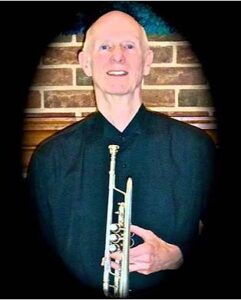
Don Tison was also a gifted classical trumpet soloist.
In my opinion, Don’s skills as a classical trumpet soloist are equal and perhaps even better in some respects than the world famous, French trumpet soloist, Maurice André and the Russian trumpet soloist, Timofei Dokshizer.
Some years ago, after Don retired back in 2000, Don established his own YouTube Channel.
I have embedded some of Don’s outstanding live solo classical trumpet performances that are published on YouTube as follows:
The following is a magnificent, live concert performance of Don performing the Arutunian Trumpet Concerto accompanied
by the Baltimore Symphony on February 27, 1980. The Conductor was Alan Balter.
Don Tison performing the Arutunian Trumpet Concerto in Ab Major
Compare the Timofei Dokschitzer version by CLICKING HERE
Compare the Maurice André version by CLICKING HERE
Compare the superb, “JAW DROPPING” Philip Smith version with the NY Philharmonic by CLICKING HERE
Compare the Sergei Nakariakov version by CLICKING HERE
Compare the marvelous, Pacho Flores version by CLICKING HERE
I was personally quite familiar with the Arutunian Trumpet Concerto. This Concerto was the opening selection for my own Senior Graduation Recital at the University of Massachusetts in Amherst in early Spring of 1972. Although I used sheet music for this recital performance, I had ultimately memorized virtually all of this concerto for trumpet because I enjoyed practicing every aspect of this fine concerto so much that I memorized virtually all of this concerto over the two years following my departure from UMASS/Amherst.
This is a literal, ‘ LIGHTS OUT’ “La Virgin de la Macarena” live performance accompanied by the Baltimore Symphony Orchestra in 1998.
This live recording features the famous, and quite challenging Rafael Méndez arrangement of “La Virgin de la Macarena”. Don’s performance is terrific. And, to my ears surpasses Rafael Méndez own studio recorded performance.
To compare the Don Tison live performance to Méndez studio recording, CLICK HERE.
Don Tison also performed this same Rafael Méndez “La Virgen de la Macarena” with the University of Michigan Symphonic Band on February 27, 1961 at the Leningrad Conservatory in Russia. The Conductor was William Revelli. To hear this performance on YouTube, CLICK HERE.
Compare the delightful, Andrea Giuffredi studio version by CLICKING HERE
Compare the Canadian Brass Quintet version featuring Ronald Romm by CLICKING HERE
Here is Don Tison performing J.S. Bach’s “Brandenburg Concerto No. 2” in 1979.
Don’s magnificent tone and musicality on piccolo trumpet are incomparable.
Hummel Trumpet Concerto, 3rd Movement
Here is an April 16, 1962 recording of Don Tison performing the 3rd movement of the Hummel trumpet concerto accompanied by the University of Michigan Band at a concert in Chicago.
John Stanley Suite Number 1 with Organ Accompaniment
I am speculating that Don Tison performed this recording on a piccolo trumpet. Don’s tone quality, articulation, and musicianship are second to none on this recording.
Matthias Spiegler’s Canzon a 2
Don Tison performsthis composition magnificently on piccolo trumpet. The ensemble includes Bassoon, Basso Continuo, (Cello and Harpsichord) and was performed at the Peabody Conservatory recital hall in Baltimore at a date that is not known at this time. This is a gorgeous live recording.
Living in Baltimore
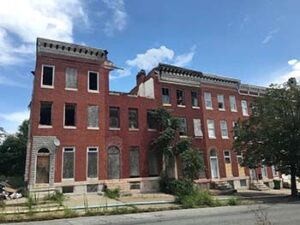 The Mount Vernon Place
neighborhood is where Peabody Music Conservatory is located. This neighborhood is a very small area that in terms of palatial homes for the affluent residents, is reminiscent of the far larger, and much more affluent and beautifully maintained Beacon Hill neighborhood in Boston.
In 1973 and 1974, Baltimore was already suffering from urban decay of staggering proportions. According to an article in Quora, “Baltimore’s decline began in the 1950s and has been ongoing due to various factors including deindustrialization, demographic shifts, and socioeconomic challenges. The responses highlight issues such as poverty, crime, drug addiction, and political mismanagement as contributing to the city’s deterioration”.
In 1978, I began working full time with a number of retired military bandsman who spent much of their military music career stationed in Washington, DC. Washington is about a one hour drive south of Baltimore. When I mentioned my time spent in Baltimore to these musicians, each of them would always laugh and comment that Baltimore was the biggest dump and trash heap of a city that they ever visited.
The only thing creepier than the decay of these vast Baltimore neighborhoods is the eerie silence during daytime hours. Endless miles of trashed out two and three story brick row-houses. Trash of every description and litter clogged the sidewalks and roadsides throughout the city. The worst of the Bronx and Harlem, NY would be a garden paradise compared to Baltimore. Miles and miles of blocks as far as the eye can see in every direction were completely deserted in the middle of the day. Even the small, and relatively affluent Mount Vernon Place neighborhood was by and large deserted in the middle of the day. However, things would tend to liven up a bit at night when drug dealers and prostitutes begin to ply their trade.
I have visited and performed in virtually all of the large urban centers in the United States as well as Canada. The only two hell holes that approached Baltimore in expanse of urban decay were Gary, Indiana, East St. Louis, and some of the communities in N.E. New Jersey such as Newark.
I lived in the French Quarter in New Orleans continuously for 30 years and in the New Orleans area for 35 years. New Orleans suffers from enormous urban decay like Baltimore. However, even the poor folks who reside in rough and tumble ghetto neighborhoods are generally quite cordial and seem to be reasonably happy with their lot in life.
Contrary to my many years in New Orleans, Baltimore gave me the creeps in every way. What people I did encounter in Baltimore were generally a very rude and unhappy lot. The sound of laughter was non existent and seeing someone smile was an unusual occurrence. Baltimore emitted bad vibes towards me in every way. When I went for a walk with my dog King, the rare person I did encounter would glare at me with hatred in their eyes.
In early September of 1973, I found a dump of a furnished efficiency apartment that provided housing for my dog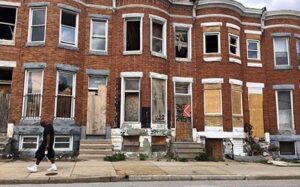 King and myself. This furnished apartment was on the third floor of a row house whose appearance was reminiscent of the two photos set to this page.
Rent, including utilities was $70.00 a month. According to the United States Bureau of Labor Statistics own ‘Inflation Calculator’,
$70.00 a month in 1973 is the equivalent of $518.70 in 2024.
Although I had sufficient savings to cover rent and groceries for a year or more, I decided to get a part time job where I could earn enough income to cover my living expenses in Baltimore.
I ended up getting a part time job as a ‘custodian’ at the YWCA building in downtown Baltimore. My apartment was a four block walk from Peabody Conservatory at Mt. Vernon Place. And, my apartment was about a seven block walk to the YWCA.
I worked four mornings a week for four hours each morning. A major task that I routinely performed was mopping the floors and after the floors dried, I operated a large, rotating electrical buffing machine for applying wax and buffing the long hallway floors.
In 1973/1974, I got paid a ‘minimum’ wage of $1.60 an hour which is equivalent to $11.86/hr in 2024. (According to the United States Bureau of Labor Statistics own ‘Inflation Calculator‘) . After taxes and various deductions, I was clearing a bit under $90.00 a month which was close to covering my living expenses.
The person who hired me was the Superintendent of the large, downtown YWCA building complex. This person was a tiny white woman who was 84 years old. (Unforgettable). She had been employed by the Baltimore YWCA for 60 years when I met her. This woman was less than five feet tall and could not have weighed more than 75 lbs. Snow white hair set up in an old fashion bun hair style and silver, wire rim glasses.
She commuted about 20 miles into Baltimore via bus at the crack of dawn every day.
She also had the less than charming disposition of Sister Mary Stigmata, AKA “The Penguin”, the nun who was the director of the orphanage where the “Blue Brothers” (first Blues Brothers movie) grew up in Chicago.
With the exception of the female building Superintendent and myself, all other staff members as well as the female live in tenants at this YWCA were black. The entire staff as well as female tenants were terrified of the elderly female building superintendent. After almost nine months of laboring at this institution, I never saw a single person smile. The only person who ever spoke to me was this bad tempered, elderly, female building superintendent.
The highlight of each week was my one hour trumpet lesson with Don Tison.
Other than Don Tison, I had three friends. These friends were musicians I worked with prior to moving to Baltimore in September 1973.
All three were students at Peabody Music Conservatory and also performed with the Annapolis Symphony.
My friends were Tim Beck who was a very talented classical trombonist as well as Tim’s fiancé, Marcia who played Cello. Both were seniors at Peabody. And, as a married couple, they moved to Germany where they joined up with a German Radio Orchestra.
The third friend, (I forget her name) was a violist from NYC I met earlier in 1973 where we both performed with the Cyprus National Chamber Orchestra. She was enrolled in the Master’s of Music program in Baltimore.
Other than Don Tison, I did not make a single new friend during my nine months living in Baltimore. This was another major factor on my intense dislike about not wanting to have anything to do with Baltimore ever again.